Tuesday, 25 October 2016

Character


A good description of a character goes a long way to letting you get to know that person — but it's a tricky business. The best way to learn this challenging skill is by studying how others have pulled it off in the past. So here are some examples of our favorite character descriptions from science fiction and fantasy books.

Ender's Game by Orson Scott Card (page 10):"Ender did not see Peter as the beautiful ten-year-old boy that grown-ups saw, with dark, tousled hair and a face that could have belonged to Alexander the Great. Ender looked at Peter only to detect anger or boredom, the dangerous moods that almost always led to pain." Nice construction, telling us how other people see Peter, but then juxtaposing it with the more visceral way that Ender sees him.

The Hundred Thousand Kingdoms by N.K. Jemisin (page 30):"… Face like the moon, pale and somehow wavering. I could get the gist of his features, but none of it stuck in my mind beyond an impression of astonishing beauty. His long, long hair wafted around him like black smoke, its tendrils curling and moving of their own volition. His cloak — or perhaps that was his hair too — shifted as if in an unfelt wind. I could not recall him wearing a cloak before, on the balcony. The madness still lurked in his face, but it was a quieter madness now, not the rabid-animal savagery of before. Something else — I could not bring myself to call it humanity — stirred underneath the gleam." This is full of lovely imagery, including the hair and the cloak moving like smoke — and it leaves you with a really sharp impression even as you don't ever get a clear impression of him, because Yeine doesn't either. It's like a painting that sticks with you.
Hitchhiker's Guide to the Galaxy by Douglas Adams (page 11):"He was not conspicuously tall, his features were striking but not conspicuously handsome. His hair was wiry and gingerish and brushed backward from the temples. His skin seemed to be pulled backward from the nose. There was something very slightly odd about him, but it was difficult to say what it was. Perhaps it was that his eyes didn't seem to blink often enough and when you talked to him for any length of time your eyes began involuntarily to water on his behalf. Perhaps it was that he smiled slightly too broadly and gave people the unnerving impression that he was about to go for their neck." This description of Ford Prefect is sparky and full of action, you can practically see him smiling unblinkingly at you.

Photoshop


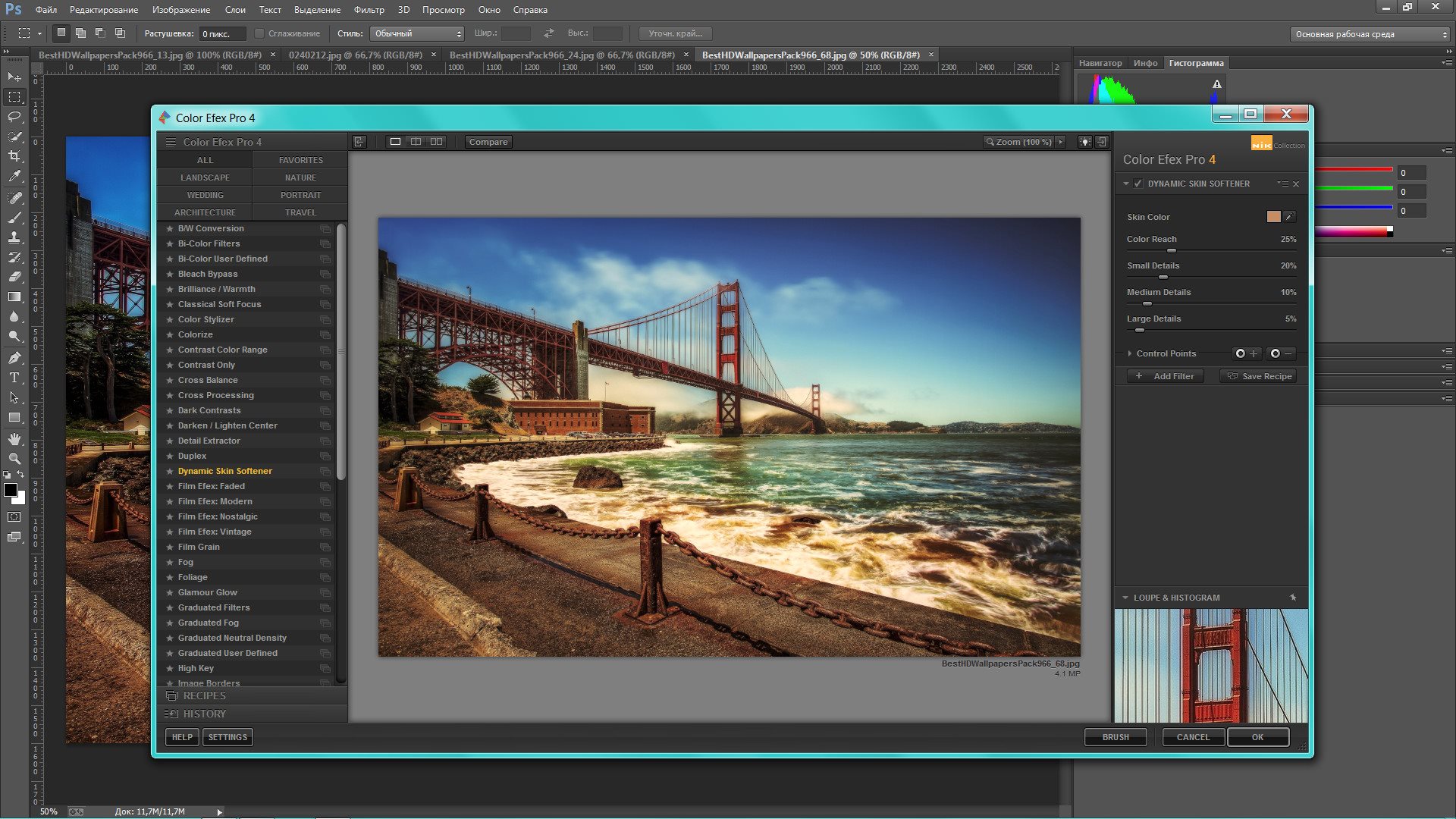
Even if you've never worked with images on your computer, you may have heard of Photoshop. Available for both Windows and Mac, Adobe Photoshop is an extremely powerful application that's used by many professional photographers and designers. You can use Photoshop for almost any kind of image editing, such as touching up photos, creating high-quality graphics, and much, much more.

In fact, Photoshop has so many features that it may actually be too powerful for many users. It's also very expensive, so unless you need to edit photos or graphics professionally, Photoshop may not be the best option for you. You may want to review our lesson on Photoshop Alternatives to learn about some other image editing programs you can choose from.

Appearance


She is skinny. (negative) negativeShe is fat. (negative) negative
She is anorexic. (medical)She is tubby. (negative) negative
She is underweight. (negative) negativeShe is overweight. (negative) negative
She is thin. (negative) negativeShe is plump. (neutral) neutral
She is slim. (positive) positiveShe is stocky. (neutral) neutral
She is slender. (positive) positiveShe is bonny. (positive) positive

Drug Addiction


Many people don't understand why or how other people become addicted to drugs. They may mistakenly think that those who use drugs lack moral principles or willpower and that they could stop their drug use simply by choosing to. In reality, drug addiction is a complex disease, and quitting usually takes more than good intentions or a strong will. Drugs change the brain in ways that make quitting hard, even for those who want to. Fortunately, researchers know more than ever about how drugs affect the brain and have found treatments that can help people recover from drug addiction and lead productive lives.

What Is drug addiction?

Addiction is a chronic disease characterized by drug seeking and use that is compulsive, or difficult to control, despite harmful consequences. The initial decision to take drugs is voluntary for most people, but repeated drug use can lead to brain changes that challenge an addicted person’s self-control and interfere with their ability to resist intense urges to take drugs. These brain changes can be persistent, which is why drug addiction is considered a "relapsing" disease—people in recovery from drug use disorders are at increased risk for returning to drug use even after years of not taking the drug.
It's common for a person to relapse, but relapse doesn't mean that treatment doesn’t work. As with other chronic health conditions, treatment should be ongoing and should be adjusted based on how the patient responds. Treatment plans need to be reviewed often and modified to fit the patient’s changing needs.

Interests and Problems of Youth

Youth is a period of life which is of utmost importance in the life of man. First, man's entire life is rooted in his early years. The morals and beliefs, range of interests, education, health and habits are all laid in childhood and youth, the personality is shaped. Second, youth is a time when a person is trying to find his place in the world. This period is usually associated with problems: young people 'struggle' to fit themselves into society. Difficult decisions and adjustments face young people in today's society. There are several problems the young generation face. They are the eternal problems of choosing a career and getting education, the problem of independence and money, the problem of unemployment of young people, the generation gap. Young people have many problems of emotional and personal character which may look silly and unimportant in the eyes of grown-ups but appear to be extremely important to the young. They are the problems of friendship and loneliness, as well as the problem of the first love.Probably the most vital problem is choosing a career, which is really difficult. One thing that makes it so difficult is the responsibility you have to take on — it is widely known that your future life depends on the choice made early in life when your personal experience is not so great. Sometimes you may even be not quite certain about the field of knowledge you are interested in. The second reason is that to make this choice you have to get some idea of the labour market and job opportunities. Third, there are parents who usually have their own idea of your future career and, in many cases, try to make their child choose the career path they prefer.Perhaps one of the most fundamental problems faced by young people today is unemployment. Young people today have certain needs and aspirations. Because of the universal downturn in the economy combined with technology when particular jobs and skills are made obsolete, many youths today are experiencing problems in obtaining jobs. Unemployment means financial worries, frustration and discouragement. To solve the problem of unemployment, young people should strive for higher education. Then they would be qualified for skilled labour required by industrialized society.Another problem facing young people today is the tension which exists between parents and children, or the 'generation gap'. In their eagerness to achieve adult status and live their own life, young people may resent any restrictions. They believe that their parents are overanxious and overprotective, which usually creates tension. The 'generation gap' problem is really inevitable. Firstly, every generation is unique in its experience, and young people have always rejected or at least questioned the values of their parents. They have always wanted to learn from their own experience, not from their parents' standards. Secondly, every younger generation tends to be more educated and better-informed than the previous one; they grow more quickly and enjoy freedom more. Thirdly, parents tend to aggravate the situation: they try to impose their ideas upon their children. It results in young people's revolt against adult authority. Parents should exercise control over young people, and try to overcome the differences but with sympathy and understanding.An area which poses a problem for young people and their parents is love and dating. Some parents today are prepared to give their children some freedom, others are overprotective, restricting their children from going out with the opposite sex. Thus, many young people today can't get the valuable experience of adjusting to other people.Many youths may not be mature enough to cope with such problems, that is why they go in the direction of crime, drugs, vandalism, drinking etc. Often young people are forced either consciously or unconsciously to become involved in those antisocial activities by people of their own age group. Moreover, they compensate for their feelings by revolting against society and adult authority.The second one is the problem of friendship. Youth is the time when a person is vulnerable to opinions of different people, especially to the opinions of his peer group. Another problem is problem of love and dating. Some parents are democratic in this respect, and allow their children considerable freedom in their relations with the opposite sex. Others are overprotective and forbid their teenage children to go out with people they like, which, in my opinion, can result in many psychological problems as they prevent their children from getting an experience of communicating with representatives of the opposite sex, and this can lead to serious family problems later.Grown-ups should work together with young people to help them solve these problems. We must remember that the young people are the leaders of tomorrow.